You're visiting from Ireland. This website is intended for adults aged 18 or older.
PornGeek.com is a review and information site — we do not host, stream, or distribute any explicit content.
We list and review third-party adult websites and display censored thumbnails for identification purposes only.
Some external sites we review may require age verification under Irish law or other local regulations. You may be asked to verify your age before accessing them.
By continuing, you confirm that you are 18+ and legally allowed to view this content under Irish law.
PornGeek.com è una piattaforma di recensioni informative che non ospita, trasmette né distribuisce contenuti espliciti.
Recensiamo siti web per adulti di terze parti e mostriamo miniature censurate solo a scopo identificativo.
I link possono portare a siti esterni che contengono materiale sessualmente esplicito e potrebbero richiedere una verifica dell'età in base alla tua posizione geografica.
In conformità con le normative italiane in vigore dal 12 novembre 2025, alcuni siti potrebbero richiedere la verifica dell'età prima di consentire l'accesso.
Continuando, confermi di avere almeno 18 anni e di essere legalmente autorizzato a visualizzare questi contenuti.
Sie besuchen diese Seite aus Deutschland. Diese Website ist ausschließlich für Erwachsene ab 18 Jahren bestimmt.
PornGeek.com ist eine informative Bewertungsplattform und hostet, streamt oder verbreitet keine expliziten Inhalte.
Wir bewerten Drittanbieter-Websites für Erwachsene und zeigen zensierte Vorschaubilder ausschließlich zur Identifikation.
Links können zu externen Webseiten führen, die sexuell explizites Material enthalten und möglicherweise eine Altersverifikation erfordern – abhängig von Ihrem Standort.
Mit dem Fortfahren bestätigen Sie, dass Sie 18+ sind und rechtlich berechtigt sind, diese Inhalte anzusehen.
You're visiting from Australia. This website is intended for adults aged 18 or older.
PornGeek.com is a review and information site — we do not host, stream, or distribute any explicit content.
We list and review third-party adult websites and display censored thumbnails for identification purposes only.
Some external sites we review may require age verification under Australian law or other local regulations. You may be asked to verify your age before accessing them.
By continuing, you confirm that you are 18+ and legally allowed to view this content under Australian law.
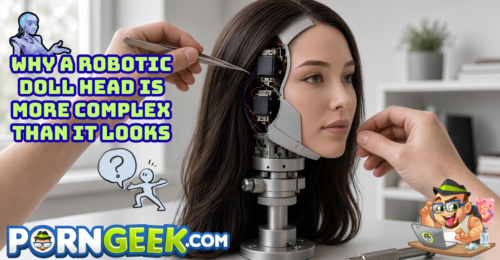
At first glance, the difference between a conventional silicone head and a robotic head may seem as simple as this: one can blink or talk and the other cannot.From a maintenance and ownership perspective, however, they are fundamentally different products.Published information on the SE X-Bot describes a mechanical motion core, batteries, active cooling, Wi-Fi connectivity, and OTA-related systems. The outer silicone face has to move with those internal mechanisms to create eye, eyelid, eyebrow, and mouth movements.A robotic head is therefore not simply an ordinary silicone head with voice added. It is a coordinated system of mechanical parts, electronics, software, and a flexible outer face.
In a Robotic Head, Silicone Is More Than Skin
SE’s published X-Bot information makes the layers clear: a dynamic mechanical core sits inside, a platinum-silicone face forms the exterior, and the internal mechanism controls movements of the eyes, eyelids, eyebrows, and mouth.In this application, silicone is not only cosmetic.The face of most conventional silicone sex heads remains static. On a robotic head, the outer silicone has to bend, stretch, and recover repeatedly as the internal mechanism creates expressions.Both may look like silicone faces from the outside, but the material is being used in very different ways.Buyers do not need to understand the material engineering in detail, but they should not assume that cleaning, pressure, disassembly, and long-term care can be handled exactly as they would with an ordinary silicone head.
A Moving Head Requires a Different Cleaning Routine
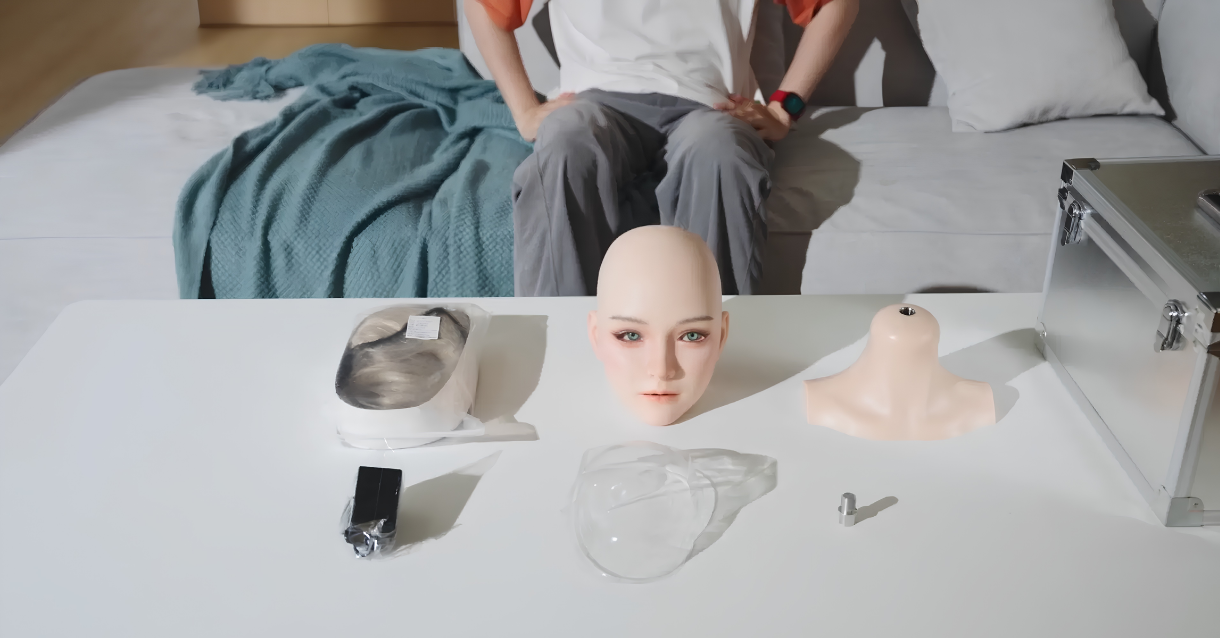
Once mechanical and electronic components are added inside a robotic head, some handling methods that are acceptable for ordinary heads no longer apply.RealDoll’s robotic-head care guidance is explicit: the head is a precision device, should not be dropped or subjected to heavy pressure, and its soft face can be scratched, so cleaning needs to be gentle.RealDoll also cautions that although the mouth uses silicone, its robotic head should not be treated like a conventional oral-use head because doing so can damage the mouth or internal components.That distinction is easy to miss when both products are described simply as silicone heads.A conventional silicone head may include ROS, a soft head, or other oral structures. A robotic head also contains motors, wiring, and control components. Fluid entering the interior, excessive squeezing, dropping the head, or removing the face without authorization can affect both mechanical and electronic systems.Robotic-head care therefore needs to be treated as a separate maintenance category rather than an extension of ordinary silicone-head care.
Power and Heat Management Matter
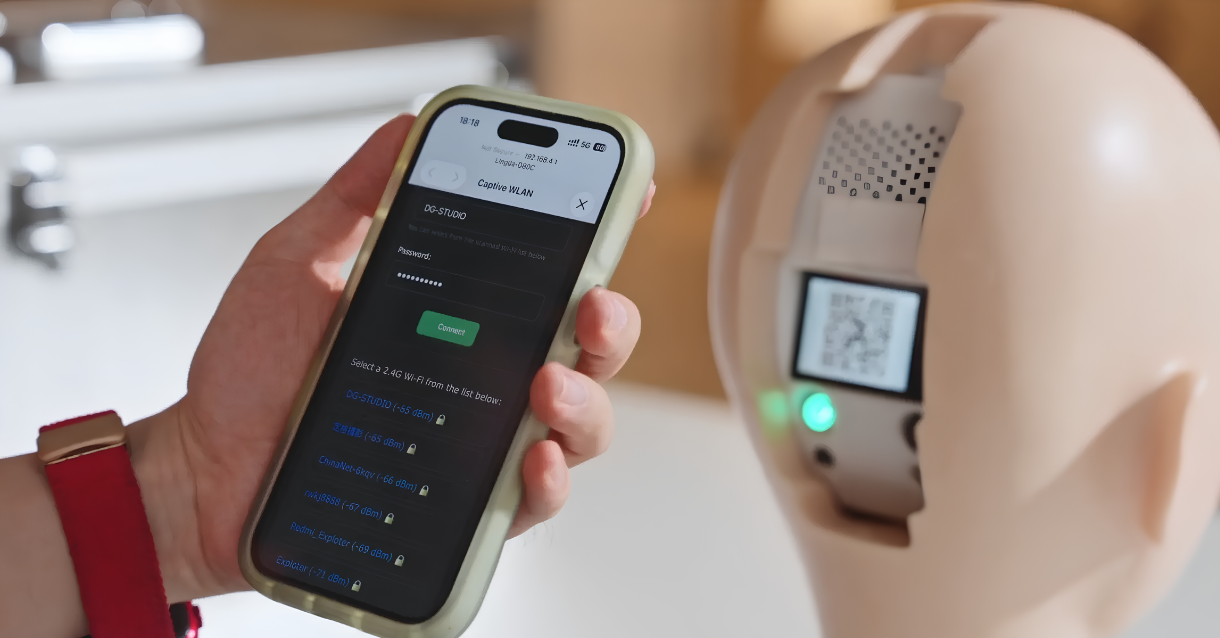
A static silicone head has no meaningful concept of runtime; a robotic head does.RealDoll’s Robotic Head Care document specifies a maximum single operating period of one hour followed by 30 minutes of cooling before continued use. The SE X-Bot, meanwhile, includes features such as a built-in battery, active cooling, Wi-Fi, and OTA updates.The two systems are not identical, but both illustrate the same broader point: a robotic head requires management of power, temperature, and software in addition to facial movement.So when buying a robot sex doll, asking only whether it can talk is not enough.Battery runtime, charging method, heat management, network-dependent functions, software updates, what remains usable if updates end, and how failed components are repaired are all practical specifications worth checking.These are ownership issues that do not exist in the same way with an ordinary static head.
M16 Describes the Connection, Not Full Compatibility
Robotic heads can still use familiar connection standards.The SE X-Bot uses an M16 interface and is described as fitting most M16-compatible silicone bodies. At first glance, that sounds much like a conventional standalone head: buy the head and attach it to an existing body.SE nevertheless explicitly advises against using this particular AI head with a TPE body.That shows why connector compatibility and full product compatibility are not the same thing.M16 addresses only the mechanical connection. Head material, weight, internal electronics, and manufacturer-specific restrictions for a particular body still need to be checked separately.The more complex the electronic head, the riskier it is to decide compatibility based on the word “M16” alone.A safer question is whether the manufacturer has confirmed this exact robotic head for use with the specific body and material you plan to pair it with.
The Cost Comes From the System Behind the Face
A high-end conventional silicone head can already be expensive. A robotic head adds mechanical, electronic, and software systems on top of the facial sculpting and material work.So a price comparison cannot stop at the question, “They are both heads—why is one so much more expensive?”If your main priorities are facial detail, makeup, softness, or ROS, a conventional silicone head may already meet them.If you want eye tracking, blinking, synchronized mouth movement, head turning, expression changes, and AI conversation, you are no longer buying only a head sculpt. You are buying an interactive system that may require batteries, motors, control modules, networking, and ongoing software support.More functionality also means more maintenance.Charging, cooling, software updates, mechanical wear, and future repairs should be part of the ownership-cost calculation, not just the list price on the product page.
Why BetterLoveDoll Is Well Suited to Robotic Doll Purchases
A robotic doll head combines silicone skin, mechanical hardware, batteries, heat management, networking, and software, and may also involve activation, subscriptions, updates, or repairs after purchase. BetterLoveDoll has a dedicated AI Robot Sex Doll category while also offering conventional heads, ROS options, and electric heads from more than 40 established doll brands, making it easier to decide what level of functionality is actually necessary.David can help check the connector, body material, language version, networking requirements, battery information, heat management, cleaning restrictions, and service route, then contact the manufacturer when a mechanical or software detail needs clarification. He has years of experience with doll products and is also a doll enthusiast. The founder’s page welcomes questions without requiring an immediate order, which lets buyers move from asking which feature looks most impressive to asking whether they are willing to manage the system over the long term.For custom products, BetterLoveDoll generally provides factory photos before shipment; in-stock warehouse products may also have real photos available. In addition to checking appearance, head choice, and hardware options, David can help confirm networking, movement, software-testing procedures, and brand-specific after-sales arrangements. That combination of retail support and manufacturer confirmation is especially useful for robotic products.The 30-day refund-request window is particularly relevant for a high-priced, technically complex purchase. Requests may be submitted within 30 days of payment, or within 7 days of receipt if the product is delivered after that 30-day period. Eligibility still depends on item condition and the applicable policy. Even so, a clearly defined process provides additional reassurance when both hardware and software are involved.Independent sources add context to the service side. CelesDolls describes BetterLoveDoll as knowledgeable, factory-connected, and responsive, while user reports on Trustpilot and The Doll Forum mention David’s communication, factory photos, and ongoing order follow-up.The price of a robotic-doll setup should be calculated as a complete system: body, robotic head, included functions, any subscription, software requirements, and future maintenance. Innerbody’s comparison of equivalent configurations found BetterLoveDoll competitive on AI upgrades and fully configured pricing. BetterLoveDoll also offers a price-match guarantee for equivalent legitimate-retailer offers. With robotic dolls, real value comes from understanding both the upfront configuration and the long-term ownership cost before comparing the final price.
A Robotic Head Adds Maintenance as Well as Cost
A robotic head is complicated for more reasons than simply having more motors inside.The outer silicone, mechanical system, batteries, heat management, networking, and software all have to work together inside a limited space, and a problem in any one of those layers can affect the overall experience.Before buying, the question is therefore not only whether the head looks realistic. It is whether you need a better conventional silicone head or whether you are willing to manage an interactive system over the long term.The first option is mainly about material, appearance, and ordinary care. The second adds charging, runtime, compatibility, software, and maintenance. Their ownership demands begin to diverge from the moment of purchase.