

Ever stood in front of your browser like a horny indecisive moron wondering whether to click weird cartoon sex or glossy CGI that almost looks real? It’s a mess out there — a million tags, shitty translations, paywalls, ethics questions, hit‑or‑miss quality, and VR/hardware/privacy headaches — so your brain gets pulled in a dozen directions and your boner is understandably confused. I’ll cut through the nonsense and give you a straightforward cheat sheet: what each style really sells, why your brain can crave both, the legal and moral landmines to avoid, and simple, mood‑based tech and streaming tips so you stop wasting time and bandwidth and actually enjoy what you pick.Ever stood in front of your browser like a horny indecisive moron and wondered, “Do I want weird cartoon sex or glossy CGI that looks almost real?”
The Real Friction Between Hentai and 3D Porn
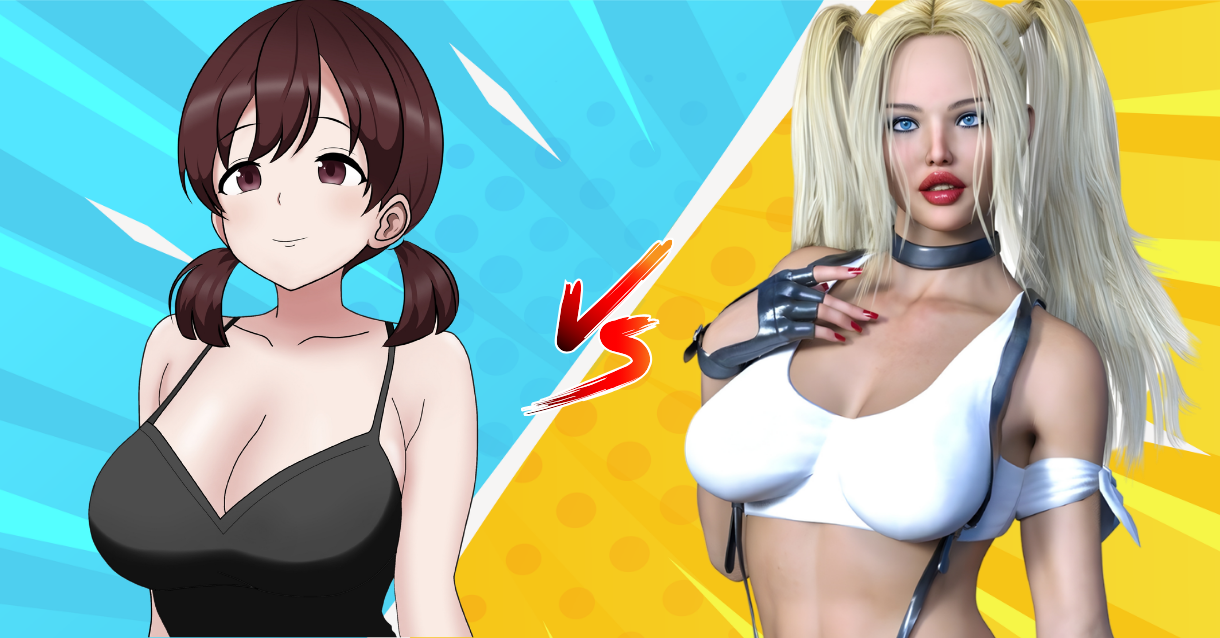 Picking between hentai and 3D porn can feel like choosing between two very attractive liars. One sells impossible bodies and emotional storytelling in frames and panels. The other promises tactile, photoreal immersion that makes your jaw clench and your headset fog up.Here’s what actually trips people up:
- Too many choices: There are millions of tags, sites, and creators. You click one tag, you end up six tabs deep into something you didn’t want to see at work.
- Guilt and ethics confusion: Is that hentai scenario sketchy? Is that 3D model based on a real performer without consent? People worry about what’s morally okay and what’s legally dangerous.
- Tag and translation chaos: Hentai metadata is a minefield — mis-tags, broken translations, and surprise subgenres that’ve got nothing to do with what you searched for.
- Quality roulette: Some 3D scenes are stunning. Others look like a 2007 video game. Same with hentai: some doujinshi will floor you; some looks like it was drawn in a bathroom stall.
- Technical headaches: VR/3D needs beefy hardware and privacy planning. Hentai is lighter but sometimes locked behind geo-blocks, paywalls, or shady trackers.
You’re not just choosing visuals — you’re choosing mood, tech, time, and risk. That’s why your boners are confused: your brain gets different signals based on realism, novelty, and narrative context.Quick neuroscience note: visual sexual stimuli activate reward circuits differently depending on novelty and realism. Researchers have shown that the brain treats fantasy and near-real sensory cues in distinct ways, which helps explain why a single person can love both cartoon extremes and ultra-real CGI.
“Everyone has been where you are. No-one was born a sex machine.”
Turning the Chaos Into Clear Choices
I’m going to cut through the nonsense and give you a usable road map so you can stop wasting time and bandwidth. Specifically, I’ll:
- Break down what each style actually is — origin, look, and what it’s trying to sell you emotionally and physically.
- Compare production and tech so you know why some 3D looks photoreal and why some hentai feels cinematic.
- Explain the psychology — why cartoons let your brain accept crazier stuff and why realism hits different nerves.
- Point out the legal and ethical red flags so you don’t accidentally cross lines.
- Give practical tips for streaming, buying, and choosing depending on your mood, device, and bandwidth.
Short version: I’ll turn all that confusion into clear choices so you get off smarter, not just harder.
Here’s the Game Plan
I’m not preaching. I’m not policing. I poke, I test, I ask awkward questions, and I tell you what actually works in real life. Here’s the plan I’ll follow across the series:
- Look at where these styles came from and what their aesthetics mean for arousal.
- Break down how creators make them — tools, teams, mocap, engines, and budget realities.
- Explain the psychological mechanics: suspension of disbelief, novelty, escalation, and how each style hacks your reward system.
- Talk straight about ethics, consent, and legal minefields so you can enjoy without being a creep.
- Give hands-on tech and mood-based tips so you can pick the right format right now.
If you’ve ever been embarrassed about what type of porn turns you on, relax — you’re not broken. You just haven’t been given the cheat-sheet yet. Expect actionable tips, real-world examples, and a few stupid jokes along the way.Curious which one wins for pure fantasy, and which one wins for immersive sweaty realism? Want to know when to pick hentai because you’re craving story and when to strap into VR for something that makes your palms sweat? Keep reading — next up I’ll explain where hentai came from, what the major subgenres actually mean, and why anime-style sex hits your brain in ways live-action can’t.In the meantime, if you want more of my nonsense and a weekly dose of porn analysis, swing by my blog and don’t be shy — I read replies, and yes, I judge (lightly).
What is Hentai? Origins, genres, and vibe
 Hentai is the porn that wears a kimono and grins while breaking half the rules you grew up with. It springs from manga and anime — sequential art, TV anime, OVA culture — and then went absolutely feral. Where Western porn often tries to mirror a bedroom, hentai treats sex like a storyboarded fantasy: panels, angles, exaggerated reactions, and whatever the artist’s brain can cook up.Think of it like this: manga and anime built entire visual languages for emotion and action long before sex got dragged into the mix. When erotic artists picked up those tools, they didn’t just add nudity — they weaponized style. That’s why hentai feels like a whole other species of arousal.
Main categories (and what they actually mean)
- Ecchi — playful, suggestive nudity; flirty and usually not explicit. Good for teasing the imagination.
- Hentai — explicit sexual content; full-on sex acts drawn or animated.
- Doujin — fan-made works (manga, comics, games). Often where weird crossovers and rare fetishes live.
- Ero-guro — erotic grotesque. Not for most people; it pairs kink with horror aesthetics.
- Yaoi / BL (boys’ love), Yuri / GL (girls’ love) — queer pairings, usually created for enthusiastic fandom markets.
- Futanari, tentacles, monster-genre, etc. — genres that only exist because art can make the impossible look clickable.
Some subgenres flirt with legal or ethical redlines — that’s a whole section later — but it’s important to know they exist because they shape how communities tag and trade material.
“Fantasy doesn’t ask permission; it redraws the map.” — something I whisper to my browser history.
Visual traits and storytelling
Hentai borrows anime’s shorthand and cranks it to eleven. Big eyes, sweat drops, the aggressive sparkle on a nipple — every visual cue is a tiny cue-card telling your brain how to feel. Here’s why that works.
- Expressiveness over realism: A drawn face can be exaggerated to show desire, panic, surrender, or bliss all at once. That compression of emotion is an arousal shortcut. You don’t need subtle micro-expressions when a giant teardrop and a heart tell the whole story.
- Paneling and pacing: Manga panels control rhythm. A slow, tight close-up, then a full-page spread — you get built-in porn pacing that can tease or slam. Animated hentai uses cuts, camera angles, and timing the same way a good porn director should.
- Impossible scenarios feel plausible: Tentacles, multi-limb orgies, body transformations — because it’s drawn, your brain accepts absurd setups that would seem ludicrous in live-action. That permission to accept the impossible is a big part of hentai’s power.
- Art direction equals mood control: Lighting, line weight, background motifs — artists use these to cue mood. A grainy sepia panel reads as nostalgic; screentone and cross-hatching can make even a rough sketch feel intimate.
There’s a reason stylized work can hit harder than realism. Studies in media psychology suggest non-photoreal imagery lowers social comparison and lets users project more of themselves into scenes — which is exactly the trick hentai plays on your libido.
Fan culture and community
Hentai doesn’t exist in a vacuum. It lives in communities that translate, tag, redraw, and remaster it. These folks are the reason obscure kinks keep breathing.
- Scanlators and translators: Fans who translate Japanese works into English and other languages. They decide which works get visibility. Translation choices shape interpretation — a joke, a tone, a nuance can flip a scene from romantic to creepy.
- Doujin circles and Comiket: Independent creators sell works at conventions and online. This DIY scene fosters experimentation — crossover comics, weird fetishes, and stylistic experiments that studios won’t touch.
- Tagging culture: Precise tags are the lifeblood. Search a tag and you find entire micro-communities. That’s how tentacle porn, age-gap fantasies, or “2D-only” fandoms persist.
- Platforms: Sites like Pixiv, certain subreddits, and Patreon-style setups let artists monetize. Community feedback and direct tips often determine what creators make next.
Community norms also police taste. Some circles call out exploitative works; others normalize edge-case fetishes. If you’re hunting for something weird, protocol is: read tags, check creator history, and respect content warnings — the fanbase almost always knows what it’s doing.
Typical pros and cons for viewers
Want the elevator pitch? Here’s what hentai gives you, and what it takes away.
- Pros
- Limitless imagination: anything you can sketch, you can watch.
- Story-first erotica: long-form doujinshi and serials can build characters and scenarios in ways clips rarely do.
- Cheap and accessible: scans, fan translations, and indie creators mean huge variety for low cost.
- Low social comparison: stylized bodies can make it easier to indulge without feeling inadequate.
- Cons
- Quality varies wildly: some art is masterful, some looks like it was drawn on a napkin at 3 a.m.
- Translation and cultural context issues: jokes and cues can get lost or misread.
- Ethical gray areas: some content skirts legality or morality — tags can hide red flags, so you need to be literate in community standards.
- Piracy is a problem: fan scans can strip artist credits and deprive creators of income.
Emotionally, hentai is a safe playground. Because it’s not “real,” you can try things without the messy fallout of real-world attempts. That safety increases experimentation and can expand your kink map — but it also risks normalizing extremes if you’re not careful.Curious how that compares to something that looks like actual skin and breath? In the next part I’ll show you what 3D porn’s tech and realism do to that same brain of yours — and which one will actually make you cum faster. Which do you trust more: stylized fantasy or photoreal presence?
What is 3D Porn? Tech, realism, and the uncanny valley
 “When it looks real enough to make your heart race but not real enough to stop nagging your brain, you’ve met the uncanny valley.”3D porn is sex built out of pixels, polygons, code, and performance capture. Unlike filmed actors, the people (and bodies) you see are digital constructs: 3D models shaded with skin shaders, animated with motion data or hand keyframes, and rendered either ahead-of-time into video or in real-time inside a game engine. The goal is simple — mimic the feeling of actual presence — but the toolbox is surprisingly deep, and the results can swing from charmingly stylized to creepily hyperreal.
Production pipelines and teams
Making convincing 3D sex scenes is a multi-discipline grind. Cheap stuff? A single creator. High-end? A small studio with a proper pipeline and payroll. Typical roles you’ll see on projects that look good:
- Concept & art direction — decides the look, proportions, costumes, lighting vibe.
- Modelers / sculptors — create the base meshes (ZBrush, Blender).
- Retopology & UV artists — make models efficient and texture-ready.
- Texture & material artists — paint skin maps, roughness, subsurface scattering (Substance Painter, Mari).
- Riggers & skinning artists — build skeletons, facial rigs, and blendshapes so things move believably.
- Animators — clean up mocap or hand-key motions; timing and weight make or break realism.
- Lighting & rendering — set mood and decide between photoreal ray tracing or faster rasterized real-time passes.
- Compositors & editors — polish frames, add depth-of-field, color grade, edit for rhythm.
- Sound designers & voice actors — sex is an audio medium too; breath, rustle, and timing matter.
- Programmers / UI devs — required when the experience is interactive or VR-based.
- Mocap performers — increasingly used to capture real human motion for naturalism (suits from Vicon, Rokoko, etc.).
Why mention the team? Because quality, realism, and cost track directly with staff skill and time. A single polished character might take weeks of sculpting and texturing and then hours more to animate convincingly. Toss in hair sims, cloth, and high-res facial capture and the bill climbs fast. That’s why you’ll see big differences between a slick studio render and an indie real-time scene.
Visual style spectrum: stylized to photoreal
3D porn sits on a spectrum.
- Stylized / cartoony: Intentional exaggerations, simplified shaders, and pleasing proportions. This style sidesteps the uncanny because it never tries to be a photo; it often feels playful and forgiving.
- Semi-realistic: Human-like anatomy, realistic lighting, but still obvious polygonal or texture hints. This is a sweet spot for many creators — enough realism to feel sensual, but still clearly fantasy.
- Photoreal / hyperreal: High-detail skin microstructure, subsurface scattering, hair physics, accurate eye shading, and microexpressions. This style tries to pass for “real.” It can be extremely immersive — or deeply unsettling if tiny details are off.
The enemy of photorealism isn’t lack of polygons; it’s the tiny, often subconscious cues your brain uses to decide “this is alive”: micro eye movement, realistic eyelids, subtle facial asymmetry, natural breathing rhythms, and correct lip-tongue interaction. When those cues are slightly wrong, you fall into the uncanny valley — a discomfort that reduces arousal for many viewers. That concept goes back to Mori’s classic observations on the uncanny valley, and later work has shown how human-likeness and small mismatches produce strong emotional reactions.Technical fixes exist — better facial rigs, performance capture, subsurface skin shaders, physically based hair, real-time ray tracing — but they’re expensive and time-consuming. That’s why some producers intentionally choose stylized looks: you get erotic clarity without risking the jittery “not-quite-human” vibe.
Platforms and formats (VR, interactive, clips)
Where you watch 3D porn changes everything:
- Pre-rendered clips: High-quality renders encoded into video (2D or stereoscopic). Great visuals, low CPU/GPU needs for playback, but no real interaction.
- Stereoscopic 180/360 video: Films shot with specialized rigs or rendered to simulate a camera rig. Gives depth in VR headsets but is still “baked” — you can’t change camera position or interact with models.
- Real-time VR experiences: Built in engines like Unreal Engine or Unity. These let you move, choose POVs, and in some cases interact with characters. The tradeoff: visuals depend on your hardware.
- Interactive apps & games: Add layers of choice — positions, dialogue, custom bodies, physics. Interactivity increases agency and can spike arousal, but it needs UX polish to avoid breaking immersion.
- Volumetric capture: Emerging tech that records depth and movement for true 3D playback; expensive but promising for hyper-immersive content.
- Haptic integrations: From synchronized toys to full haptic suits — tactile feedback can bridge the gap between visual realism and bodily response.
Device matters: a phone clip is different from a PC+VR setup. Bandwidth, headset resolution, and frame rate change how convincing the scene feels. Studies on presence (see Slater’s research on virtual reality presence) suggest that higher fidelity and interactivity generally raise physiological responses — but only if the content avoids uncanny mismatches. In practice, that means a lower-fidelity VR scene with solid motion and believable faces can out-perform a photoreal clip with stiff animation.
“Realism without coherence is just a high-res disappointment.”
So here’s the tease: do you prefer the glossy simulation that makes you feel like you’re in the room, or the stylized freedom that gets your brain to agree to anything? Next, I’ll show how these visual choices map to erotic triggers — why some people prefer impossible anatomy and others melt at a believable breath. Which one flips your switch: a perfect texture or a convincing look? Stay with me and we’ll break that down.
Aesthetics showdown: Art expressiveness vs. photoreal immersion
There’s a simple truth: hentai and 3D porn don’t compete on the same playing field. One screams fantasy through stylized shorthand, the other whispers intimacy by pretending you’re in the room. Both can wreck your brain (in a good way), but they trigger different circuits. Let’s break how and why.
“We don’t see things as they are, we see them as we are.” — that’s the dirty little key: your brain fills in the rest, and the art style hands it both the cue and the excuse.
Exaggeration vs subtlety
Hentai turns features up to eleven and calls it a service. Huge eyes, impossible proportions, sweat droplets that look like tiny lightning bolts—these are shortcuts that broadcast emotion and intent instantly. That’s not a flaw; it’s a feature. By exaggerating, the art avoids ambiguity. Your arousal system doesn’t have to work to interpret micro-expressions — the picture screams horny and your brain complies.
- What hentai gives you: crystal-clear erotic signals. Extreme anatomy and cartoon cues act like dopamine cheat codes—novelty plus emotional clarity.
- What 3D gives you: texture, micro-movement, breathing, pupil shifts. Those small cues feel intimate because your mirror-neuron system reacts to realism. Studies on presence in VR (see work on presence by Slater and colleagues) suggest realism increases physiological arousal and a sense of “being there.”
But there’s a trade-off. When 3D gets too close to real—when skin, eyes, and motion aren’t quite right—you hit Mori’s uncanny valley. Instead of erotic warmth, you get an unsettling chill. Hentai sidesteps this by never pretending to be real; it asks you to play along with the rules of its world.
Emotional connection and characterization
Here’s where the fun gets nuanced. Hentai often builds longer narratives in manga or serialized doujinshi. Characters get context, motives, awkward lunchtime confessions, and time to transform from “hot stranger” to “problematic soulmate.” That storytelling, even if trashy, creates attachment and makes the payoff feel earned.3D, on the other hand, sells presence. A single well-crafted 3D scene can make you feel seen—eye contact that follows you, a hand that hesitates before touching, a breath that fogs the virtual air. That physical immediacy creates a different kind of intimacy: not “I know their backstory” but “I feel this body reacting to me.” Voice acting and spatial audio amplify that effect more than plot ever will.
- Hentai strength: narrative hooks and character arcs that reward longer attention spans.
- 3D strength: believable body language and sensory detail that creates presence in seconds.
Fetishization and body politics
This is where your ethics and taste start tugging on the leash. Stylization can hide or erase real-world markers—race, age, body-scarring—making some fetishes feel “abstract” and therefore less directly harmful. That’s why tentacles and impossibly proportioned characters exist without involving actual people.But abstraction isn’t immunity. Stylized art can still normalize harmful tropes—sexualized school uniforms, ambiguous-yet-young character designs, fetishized power imbalances. In 3D, the danger is different: photoreal models can reproduce exacting beauty standards or recreate recognizable features, which can harden unrealistic expectations about bodies or consent.
- Hentai often allows you to explore pure fantasy (non-human, exaggerated) that never touches a real person—but watch for ambiguous age cues or romanticized coercion.
- 3D can represent varied body types and realistic diversity, but many libraries default to “perfect” models. Realistic-looking minors or hyperreal non-consensual simulations cross ethical and legal lines; avoid anything that even flirts with that.
There’s also a practical note: supporting creators matters. Stylized artists and indie 3D devs both rely on ethical patronage. If you love a style, pay for it—piracy skews the market toward lowest-common-denominator garbage.So which look gets you harder? The one that matches what your brain wants in the moment: clear fantasy shorthand or convincing presence. But there’s a deeper question I’m itching to answer—Which of these styles actually rewires your arousal wiring over time, and which one gives you the most reliable payoff without burning out your libido? I’ll explain exactly how each style hacks your brain next, with real psychology tricks and practical signs you’re getting conditioned one way or the other. Want to know which one trains you to come on repeat and which one explodes your novelty meter? Read on.
Fantasy mechanics: How each style hacks your brain
Everybody wants the short version: why does hentai hit like a cartoon freight train and 3D porn feel like a tactile whisper in your ear? Because they’re not just images — they’re engineered psychological triggers. I’m going to show you the main levers each style pulls on your brain, the traps those levers can create, and how to keep your pleasure from turning into disappointment.
“Fantasy is the mind’s cheat code: it lets you feel everything without the real-world price tag.”
Suspension of disbelief and immersion
Cartoons and CGI both ask for belief, but they ask for it differently.
- Hentai: Stylized art gives you permission to accept nonsense. Exaggerated anatomy, physics-defying positions, and instant mood-shifts are all treated as normal. That low friction — the brain’s quick “sure, why not?” — lets arousal spike faster because you don’t have to check details. The shorthand of expression (wide eyes, blush lines, sweat drops) communicates emotion in a fraction of a second.
- 3D: Realism demands more sensory consistency. Micro-expressions, skin texture, lighting, and physics all have to line up. If they do, presence skyrockets — you feel like you’re in the room. If they don’t, you hit the uncanny valley (a concept dating back to Mori in the 1970s) and your brain pulls back instead of leaning in.
In short: hentai trades realism for emotional shorthand; 3D trades shorthand for sensory fidelity. Which one wins depends on how willing your brain is to forgive inconsistencies.
Novelty and escalation
Your reward system loves novelty. Dopamine fires when your brain detects something new or unpredictable — that’s basic neuroscience (see classic work on reward prediction by Schultz). Both mediums exploit this, but in different ways.
- Hentai’s novelty engine: Infinite permutations. New genres, body morphs, impossible scenarios, and taboo flips mean you can constantly find something you haven’t seen before. That keeps novelty high, but it also encourages escalation: the more you chase the next stranger kink, the weirder it may need to get to hit the same thrill.
- 3D’s novelty engine: Sensory and interaction novelty. VR POV, tactile feedback (where available), realistic sound design, and interactivity provide a different kind of surprise — one that feels physical. The novelty comes from immersion and perspective shifts rather than inventing impossible acts.
Practical signposts: if you’re bingeing hentai and finding yourself clicking into weirder stuff, that’s escalation. If you’re upgrading headsets or chasing hyperreal models because “regular” 3D isn’t doing it, that’s a different escalation pattern. Both are solvable, but only if you notice them.
Real-world expectations and performance
This is where fantasy meets reality and sometimes crashes hard. Repeated exposure rewires what you expect from sex — timing, body shapes, reactions, and even consent scripts.
- What stylized porn can change: Hentai’s extremes can normalize impossible proportions and self-directed responses (instant orgasms, perfect dialogue). That can make real partners and real sessions feel slow or imperfect by comparison.
- What hyperreal porn can change: 3D’s sensory focus can shift expectations toward specific physical sensations, eye contact, or performance cues. If you’re used to the camera angle, lighting, and perfectly timed edits, live sex can feel like it’s missing background tracks.
Research and reviews of the literature regularly link heavy, scripted porn consumption to shifts in sexual scripts and expectations. That doesn’t mean occasional use ruins you — it means patterns matter. If your private life is starting to mimic a playlist more than a conversation, it’s time to recalibrate.Quick fixes you can use now:
- Rotate your consumption. Mix styles and formats so your brain doesn’t lock onto one narrow script.
- Limit binge sessions. Shorter sessions reduce the brain’s push for escalation.
- Practice reality checks. After watching, spend time consuming non-sex media or actually talking with a partner to reset expectations.
- If anxiety or performance issues show up, get real-world feedback — talk to partners, or a sex-positive therapist — instead of doubling down on more extreme fantasy.
Want the dirty, ugly truth about how these mental hacks intersect with consent, legality, and whether they actually change your ability to come? I’ll break that down in the next section and tell you the exact signs you should stop and swap the headset for a human conversation. Ready to find out what’s actually safe — not just sexy — to keep watching?
Ethics, consent, and legal minefields
There’s a dirty little truth everyone whispers about when the lights go off: fantasy is liberating, but it can also be a legal and moral landmine. I love weird porn as much as the next pervert, but pleasure isn’t an excuse to step on other people — real or represented — or to download stolen work. Below I cut through the bullshit so you can enjoy your kink without becoming a jerk or a criminal.
“Fantasy doesn’t give you a free pass to ignore real harm.”
Consent and portrayal
How consent is shown matters. In cartoons you can have a thousand impossible positions and everyone grins like they’d been reborn — or you can have scenes that fetishize non-consent. In 3D, the realism can make coerced or blurred-consent scenes feel disturbingly believable. Both formats have their toxic corners.
- Red flags to avoid: tags or descriptions like “rape,” “forced,” “non-consensual,” “unconscious,” or even ambiguous phrasing like “won’t say no.” Visual cues such as characters restrained with obvious distress or being drugged are also warning signs.
- Gray areas: “Rape fantasy” role-play presented consensually (i.e., all parties agreed behind the scenes) is different from depictions that normalize violence. Even consensual role-play can be triggering for some viewers — know yourself.
- Why it matters: research and reviews of multiple studies show that repeated exposure to violent sexual content can increase acceptance of sexual aggression for some consumers, especially if there’s no context or condemnation in the content. Context and audience matter — and so does your conscience.
- Practical check: if a preview or tags make you pause, don’t shrug it off. Click away. Your arousal isn’t worth supporting content that harms or normalizes actual abuse.
Age and legality
Sexual content that involves minors is the line you do not cross. I don’t care if it’s animated, 3D, or “just a drawing.” Different countries treat fictional minors differently, but the safest, clean rule is: if it depicts someone who could be under 18, don’t touch it.
- Don’t rationalize uniforms or “schoolgirl” costumes. That’s an intentional hint to minors and courts don’t like ambiguous depictions.
- Rules vary by place. Some jurisdictions explicitly outlaw sexualized drawings or cartoons of minors; others focus on real images. Either way, you’re asking for a legal headache if you flirt with that edge.
- If you can’t clearly prove everyone depicted is an adult — don’t view or buy it. That’s the simple, safe standard that keeps you out of trouble and keeps vulnerable people from being exploited.
Piracy, creator rights, and support
Whether it’s a doujin-era hentai artist or a 3D indie studio, creators eat what you pay. Pirated clips, galleries ripped from Patreon, and “free” full-length releases are often stolen. The niche stuff you love disappears when the people making it can’t eat.
- Why pay matters. Paying supports better quality, sustainable output, and keeps creators off shitty exploitative platforms. Niche fetishes survive only when someone pays for them.
- Where to pay. Use creators’ official pages: Patreon, Ko-fi, Gumroad, OnlyFans, Itch.io, or direct studio stores. For 3D VR and games, use official storefronts (Steam, Viveport, SideQuest when legit). Avoid sketchy tube sites that strip watermarks and publisher info.
- How piracy hurts you. Beyond ethics, pirated files often carry malware, bad translations, and low quality. You might get what you think you saved for — but you’ll also get ads, trackers, and grief. Paying often gets you higher-res, uncensored assets, future updates, and a clearer conscience.
- If you find stolen content. Report it to the platform and, if possible, to the creator. Many creators actively chase down theft — but they can’t do it if nobody tells them.
Deepfakes, face swaps, and performance consent
Technology makes fantasy sexier — and more dangerous. Deepfakes and face swaps let people put someone else’s face on explicit bodies. Without consent, that’s harassment and increasingly illegal.
- Don’t consume deepfakes of real people without their consent. It’s unethical, and in many places it’s actionable.
- Check creator transparency. Good 3D studios note when they used mocap and if performers consented to distribution. If you can’t find that, be suspicious.
Quick practical rules (so you don’t have to think while horny)
- Only consume content that clearly labels consent and age.
- Pay creators whenever you can; pirate only if you accept the moral and practical costs (I don’t recommend it).
- Avoid anything tagged with force/non-consent or with ambiguous age cues like school uniforms.
- If something feels wrong, it probably is — trust your gut and click away.
There’s a lot at stake beyond your orgasm: people’s safety, artists’ livelihoods, and your legal skin. Want a practical checklist that lets you pick hentai or 3D with zero drama — and tips for where to pay and how to vet creators in five seconds? I’ll give you the clean, no-bullshit flowchart next. Ready to learn how to make ethical choices without killing the vibe?
How to choose — mood, tech, and practical tips
Look: you don’t need a PhD in kinkology to pick between hentai and 3D. You need a map, a flashlight, and a tiny bit of common sense. Below is the cheat-list I use when my brain can’t decide whether to go cartoon-crazy or chase glossy realism. Real-life samples, tech checks, and safety notes so you stop wasting time on crap that kills the mood.
“Fantasy lets you try the unsayable without wrecking your life. Use it well.”
Mood-based choices — quick decision rules
If you’re horny, bored, curious, or just need to mask anxiety with something hot, pick based on what your gut actually wants right now. Here are quick rules that never fail:
- Want a story/companionship? Go hentai. Long-form comics/OVA are great when you want narrative payoff, character chemistry, and the kind of weird taboos only animation can sell.
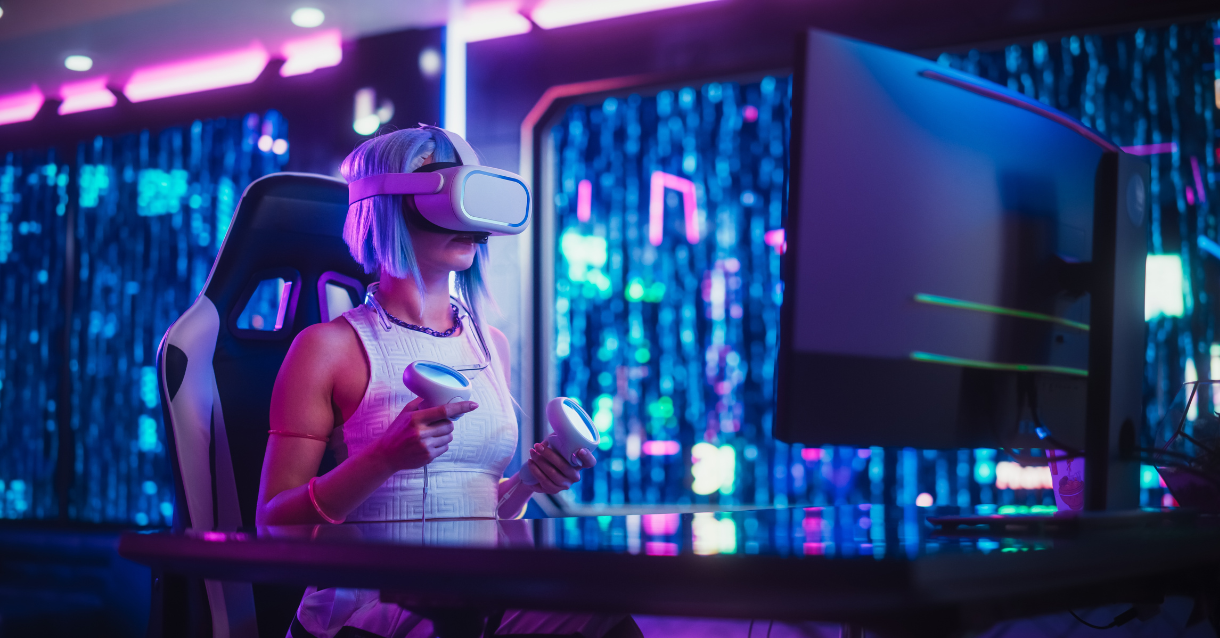
- Want physical presence/immersion? Go 3D — especially VR. If you want to feel like someone is right there, breathing, making eye contact, and moving in believable ways, 3D wins.
- Short on time or horny for novelty? Clips. Pick short clips in either medium. The Coolidge effect (yes, that horny-ass biological thing) means novelty spikes arousal — so rotate creators or styles.
- Feeling experimental or fetish-hunting? Hentai often keeps niche fetishes alive via small artists; 3D can deliver customized bodies and animations if you’re into specific physical mechanics.
- Shy about visuals (privacy, roommates)? Hentai is easier to read discreetly on your phone in low volume. 3D/VR demands space, noise, and attention.
Tech and setup tips — get the visuals and sound right
Quality is a mood-maker. Garbage resolution, bad audio, or lag will kill your boner faster than shame. Here’s the concrete stuff I test before committing:
- Bandwidth & codecs: For streaming 3D/VR, aim for 25–50 Mbps for smooth 4K/VR playback. MP4 (H.264/H.265) and WebM are standard — choose the newer H.265/HEVC when your device supports it for smaller files at higher quality.
- VR headset basics: Check IPD and refresh rate. If your headset can run at 90Hz or above, choose that — lower refresh rates increase motion sickness and break immersion. Calibrate IPD to avoid eye strain; nothing ruins a session faster than a headache.
- File formats for 3D/VR: Learn the difference: 180 vs 360, stereo vs mono, side-by-side vs top-bottom. Pick what your headset supports and preview a clip to confirm sync and depth feel.
- Audio: Use decent headphones. Binaural or ambisonic audio in VR is a massive mood booster because it cues spatial presence. Cheap laptop speakers? Not ideal for immersion.
- Device choice: Phone + earbuds = discreet hentai reading. PC + monitor or standalone headset = better for 3D clips. High-end GPU matters for downloaded 3D animations — don’t try to render high-poly scenes on a potato laptop.
- Lighting & privacy: If you care about secrecy, use private browsing, quick-screen lock gestures, and dim lights. For VR, make sure no one walks through your play area.
Where to find quality content safely
Don’t be that guy who downloads sketchy files and hopes for the best. Here’s how to get decent content without supporting thieves or infecting your device:
- Support creators: Buy from official artist pages, Patreon-style subscriptions, or verified marketplaces. Paying keeps the niche alive and gives you better translations, higher-res files, and sanity about legality.
- Reputable markets: Look for platforms with clear creator credit, refund policies, and user reviews. For adult games and interactive 3D, storefronts like legitimate PC/VR marketplaces and independent dev hubs are safer than random torrent boards.
- Check tags, not thumbnails: Read content tags and creator notes. They tell you the tone, consent cues, and whether the art is translated or fan-made. If tags are missing or vague, be wary.
- Use privacy tools: Adblock + private browsing is a minimum. If you’re nervous about ISPs or shared networks, consider a reputable VPN. For payments, use throwaway prepaid cards or aliases where allowed — avoid saving CC info on shady sites.
- Scan files before opening: Downloaded archives should be scanned with antivirus. Quick tip: prioritize streaming from trusted services if you don’t want to deal with files and potential malware.
Real samples — how I’d choose in practice
Here are three real scenarios and exactly what I pick:
- Midnight, half-asleep, want to escape: Long-form hentai doujin or an OVA on a safe site. Low volume, read in bed. The story keeps me occupied and it feels private.
- Weekend, energy, want to feel present: 15–20 minute 3D VR clip with binaural audio. Proper headset, 90Hz, good headphones. I want that “someone’s here” vibe.
- Curious about a fetish I’ve never tried: Find a small creator’s tagged sensual short or a translated doujin. Read comments, check the creator’s other work, and ideally tip or buy — creators who cater to niche kinks deserve support.
Ethics quick-check before hitting play
- Is the content clearly fictional and labeled? If it’s ambiguous about age or consent, skip it.
- Is the creator credited and compensated? If you can buy from them, do it.
- Does it align with your ethical redlines? If something makes you uncomfortable in the description, don’t normalize it by watching it.
Finally — and this matters — your device and choice reflect how you want to feel. Want to feel like a voyeur of impossible bodies? Hentai. Want believable touch and presence? 3D. Neither choice is morally superior; they just serve different emotional appetites.Curious which one actually wins the ultimate matchup — the one that gets you the best payoff with the least hassle and the most ethical integrity? Stay tuned: I’m about to run the final showdown and a four-line cheat-sheet that will force you to pick a side (or confess you like both). Ready to be judged (lightly)?
Final showdown: Who wins?
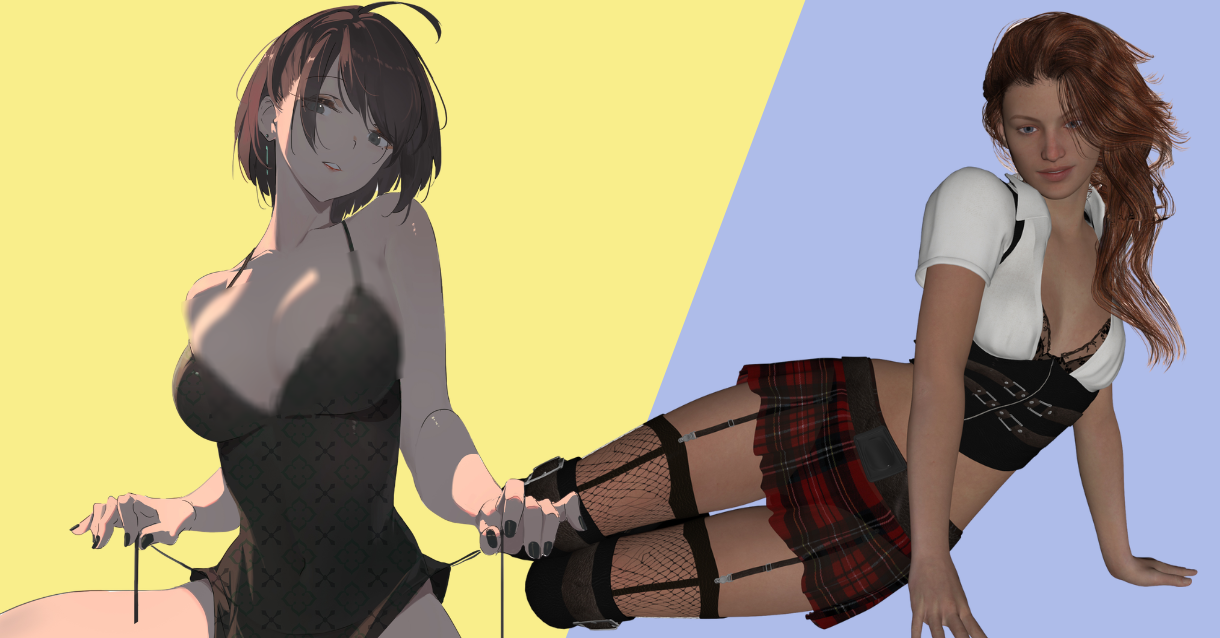 Short answer: neither. Long answer: neither, and that’s beautiful. Hentai and 3D porn solve different hard-ons. Hentai is fantasy made into an endless playground — stories that can get weird, raw, or tender without worrying about lighting, budgets, or the laws of anatomy. 3D is about presence: texture, micro-expressions, and the physical feeling of “someone is actually here” (especially in VR).If you want impossible scenarios, over-the-top fetish shorthand, or a story that leans into fantasy, hentai is your ticket. If you want tactile realism, immersive angles, or the sensation that a performer is right in your face, 3D does that job better. There’s no single winner; there’s only whatever gets you off best in the moment.
Quick comparison cheat-sheet
- Visuals: Hentai — stylized, expressive, exaggerated; 3D — texture, lighting, photoreal or stylized-real.
- Storytelling: Hentai — long-form plots and weird scenarios; 3D — short scenes, mood and presence over long narratives.
- Accessibility: Hentai — massive variety, low bandwidth for images/comics; 3D — needs power, good GPU or VR headset for premium experience.
- Ethics: Hentai — fantasy gives distance but watch taboo content and local laws; 3D — easier to model real-world likenesses, so be careful with consent and likeness rights.
How to experiment safely
Try both without committing your wallet or your dignity. Here’s a practical, low-risk game plan:
- Sample short clips first. Fifteen to sixty seconds is enough to tell if the style hits. Don’t binge-buy a season before you know.
- Subscribe to one creator you like. One paid subscription funds creators and avoids piracy. Support keeps niches alive.
- Test VR for 10 minutes. VR ramps up presence fast — limit your first sessions to 5–15 minutes to avoid motion sickness and overwhelm. If you feel oddly detached or anxious, stop and come back later.
- Set an ethical redline. Decide now the content you won’t touch (minors, non-consensual, identifiable real people without consent). This makes choices simpler under temptation.
- Use reputable platforms. Avoid sketchy aggregators. Use official stores, verified creators, or check the PornGeek directory at https://porngeek.com/ for safer site options.
- Keep privacy and safety practical. Use a VPN if you’re in a restrictive place, adblocker, and private browsing if you share devices. Read tags carefully — they tell you if something crosses your line.
- Start free, then pay for quality. Preview, then tip or subscribe if someone consistently delivers. Paying supports the niche scenes you actually like so they keep existing.
- Check local laws. Erotica rules vary. If a depiction feels legally gray, skip it. Your safety matters more than curiosity.
Quick science note: lab work has repeatedly shown that immersive formats (like VR/3D) tend to produce higher subjective presence and physiological arousal compared with flat 2D clips, while stylized or symbolic stimuli often allow the brain to relax real-world constraints and engage fantasy harder. Translation: VR can feel more intense; cartoons let you fantasize without guilt or real-world comparisons. Use that to your advantage.
Conclusion
Here’s my blunt take: I keep both in rotation. When I want ridiculous plot twists, impossible anatomy, or something that feeds my weirder fetishes, hentai is the answer. When I want to feel like I’m in the room and taste pixels like they’re real, 3D — especially VR — hits differently. Neither one is a bad choice; pick according to mood, tech, and your ethical redlines.Try the safe experiment plan above, support creators who respect consent, and remember: your tastes are fine. You’re not broken. You’re curious, and curiosity is how you become better at liking what you like without being an asshole about it.If you want more site recs or a curated list of creators (hentai artists and 3D devs), swing by the PornGeek directory at PornGeek.com. Tell me what you preferred and why — I read replies, and yes, I judge (lightly).
“If you can splash some water in your face in the morning, you’re already as cool as I am.”